
Ebru Techniques on paper, Şerife Keskinkılıç
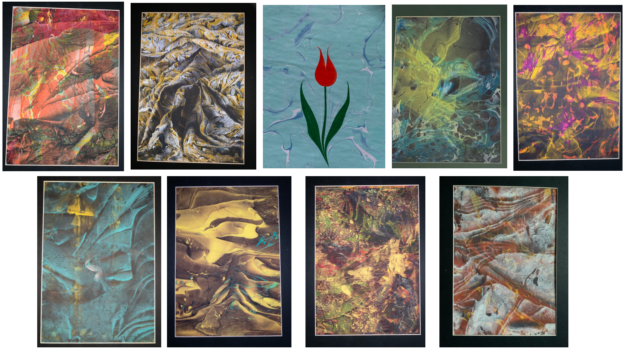
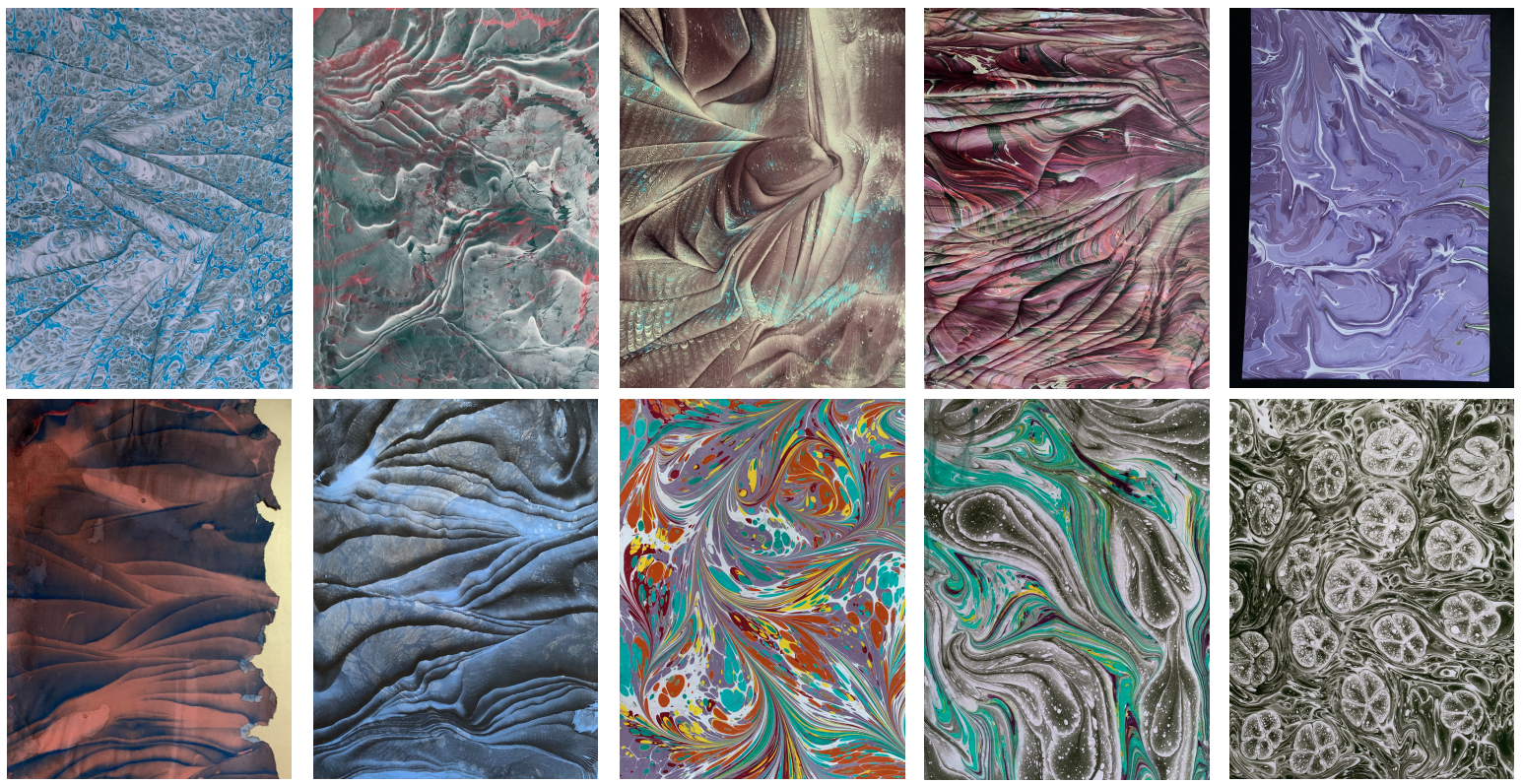
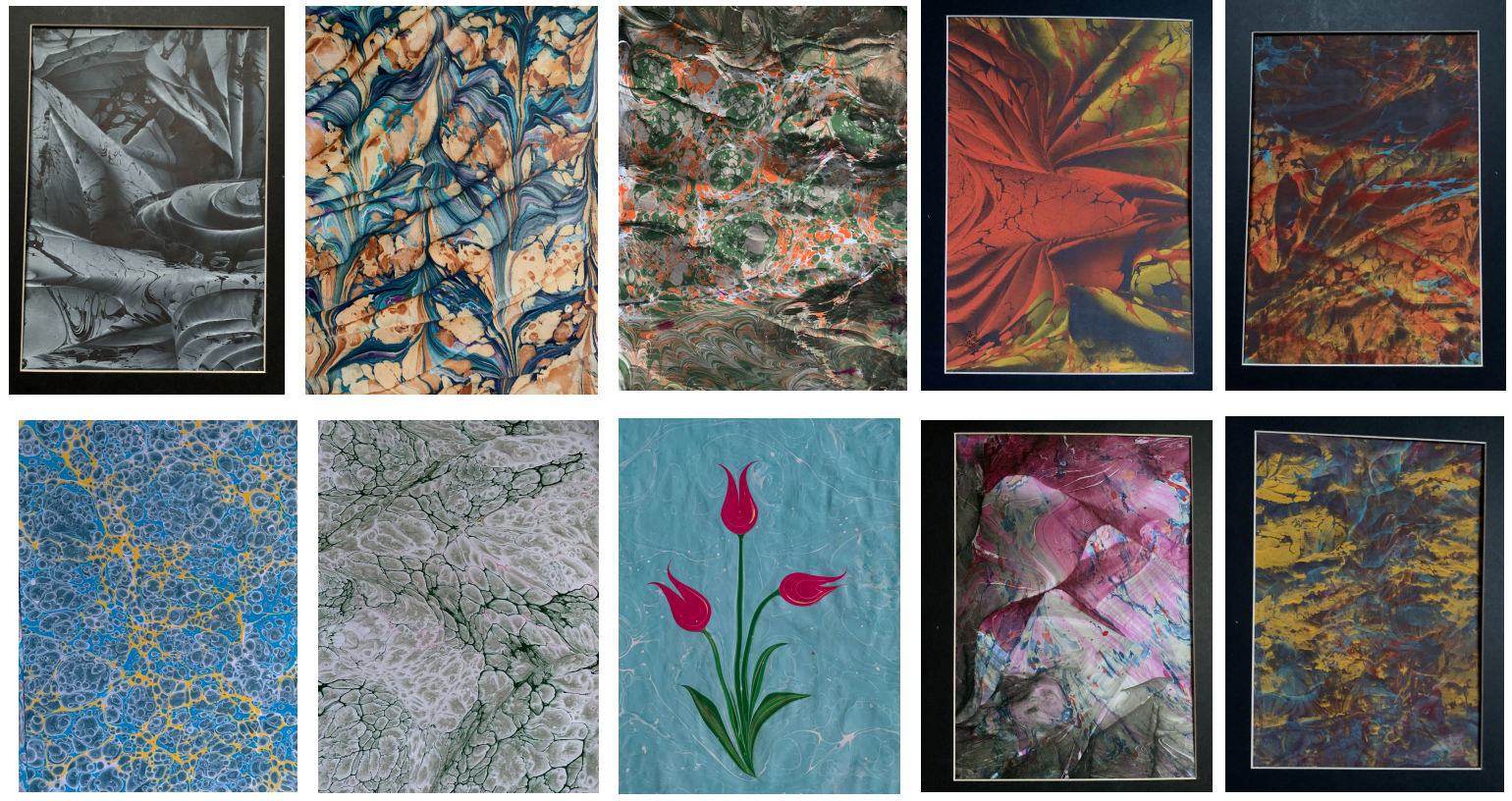
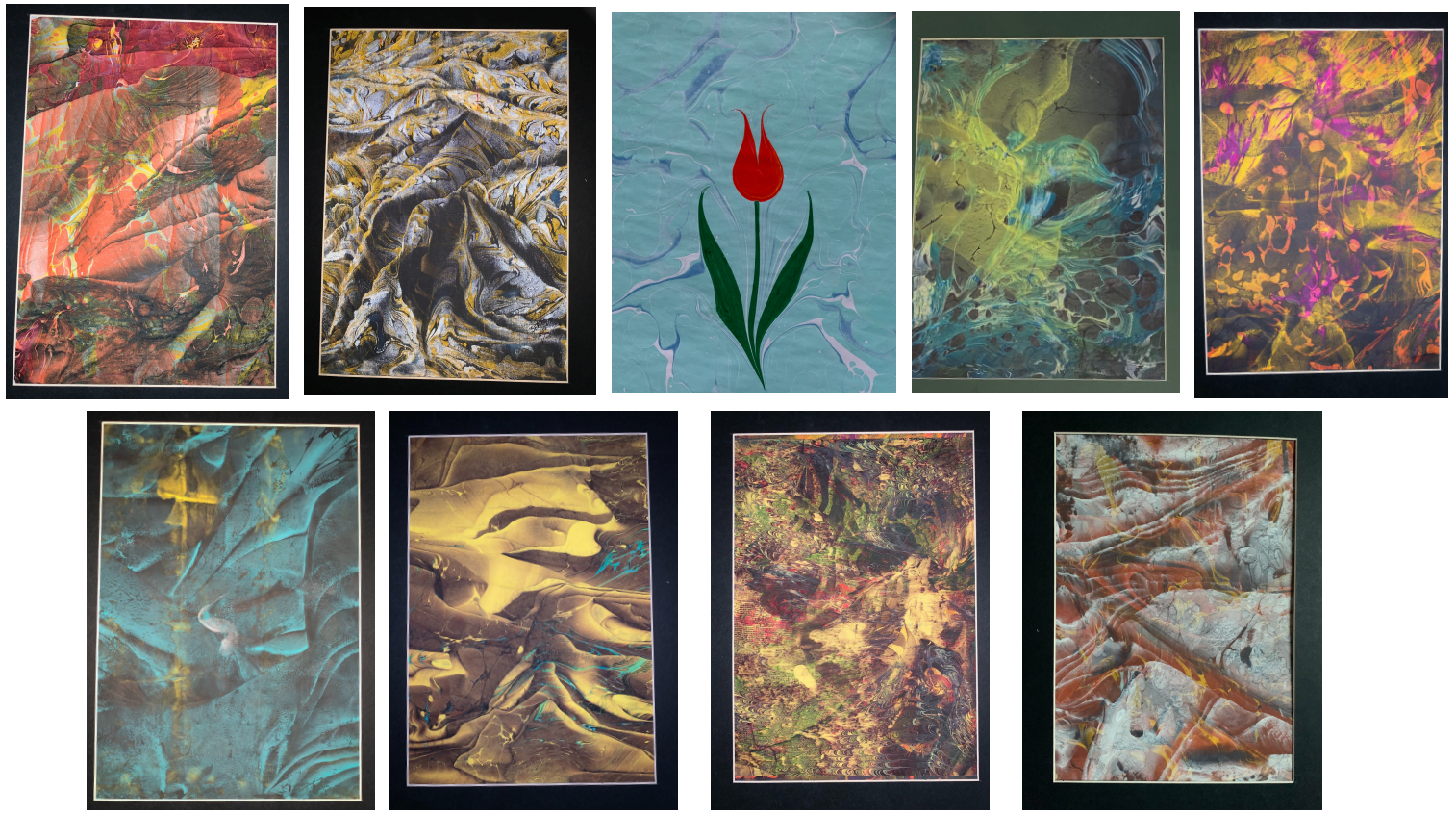
Ebru Techniques, (paper marbling)
Traditional Turkish decorative art
Both the brushes and paints used are unique to this art form. Ebru is done on water thickened using either the sap of the tragacanth plant (kitre) or carrageenan derived from seaweed. Ox gall is added to the
paints to prevent them from sinking to the bottom of the water. Paints are sprinkled onto the water with brushes.
Şerife Keskinkılıç, Ebru (paper marbling) artist, (Tokat, Turkey, 1971)
She has been practicing this art since 2012 and has been mastering it. Her work primarily focuses on marbling
paintings and marbled products. Between 2011 and 2015, she participated in group exhibitions in Turkey and won first prize in the marbling competition held in Malatya in 2012. In 2016, due to the political situation in Turkey, she had to pause her activities and studio work. In the Netherlands, she has conducted numerous workshops, including at Marres Museum, supported by AZC, RPM, and Stichting Harmoni. Her greatest goals are to promote her art, bring smiles to people’s faces, and establish strong connections with humanity through her work.
Ebru (paper marbling)
Ebru art is a traditional Turkish decorative art created by freely spreading colors on the surface of water and transferring them onto paper or other surfaces. The word “Ebru” has Persian origins, meaning “cloud” or “drop” as the patterns often resemble clouds, waves, and natural motifs.
History
Although the exact origins of Ebru art are uncertain, it traces back to Central Asia and Iran. In Turkey, it
began to be used during the Ottoman period, especially from the 15th century onward, for bookbinding
and embellishing calligraphy. By the 19th century, it had developed alongside miniature and calligraphic
arts, becoming a classical form.
-
 € 2.000,00
 -
 € 250,00
 -
 € 200,00


Reviews
There are no reviews yet.